FAQ
Things you might be wondering.
Is this veterinary advice?
No. We tell you what the weather is doing. Whether, when and how
much to give is between you and your vet.
Does it actually predict thunderstorms before they happen?
It tracks the things that precede them: a sharp drop in barometric pressure,
rising convective energy in the air, and the first strikes inside your radius.
Lightning alerts often give you some minutes of warning, and pressure trends
can sometimes give you hours. Neither is guaranteed.
How accurate are the alerts?
Lightning strikes are detected within seconds and located to within a few
kilometres. Pressure and forecast data refresh every ten minutes from Open-Meteo.
Storm-forecast alerts only fire when the next-six-hour thunderstorm probability
crosses 50% — we'd rather miss a small chance than cry wolf.
Can an alert be missed?
Yes. Alerts rely on lightning networks, weather data, your phone and your internet connection, and any of them can fail or run late. Treat Storm Sniff as a helpful extra, never your dog's only safeguard.
Will it drain my phone battery?
No. Notifications are server-pushed, so the app doesn't need to run in the
background. The PWA wakes only when an alert arrives. Battery cost is the same
as any other notification you receive.
Will I get spammed with notifications?
No. A storm sends a handful of alerts, not fifty: one when it first comes
inside your radius, one each time it crosses 50, 25, 10 and 5 km, and an
all-clear after 30 quiet minutes. Other alerts have a minimum gap: an hour for
pressure drops, two hours for storm build-up, three hours for forecasts, six
hours for heavy rain or strong wind, and fireworks once a day. If you set quiet hours,
only lightning within 5 km alerts you during them, and the rest waits until they end. Every account has a hard limit of 100
push notifications a day. On the free plan it's email only: one
summary a night, plus a heads-up for heavy rain or strong wind.
Will it work where I live?
Anywhere with a postcode and reasonable lightning detection coverage —
Australia, New Zealand, US, Canada, UK, EU. Coverage in remote regions
depends on the lightning network density.
What about fireworks?
The fireworks calendar is on the Pro tier — an annual schedule of
noise events (NYE, July 4, Diwali, Bonfire Night, Lunar New Year)
with an alert on the day of each event.
Is my location data private?
Your home coordinates are stored only to compute alerts for you. They're sent
to our weather provider to fetch your forecast, and never sold. We don't track
your day-to-day location.
Full details in our privacy policy.
Who built this?
Tim, an Australian engineer in Adelaide, with his partner Kayleigh and
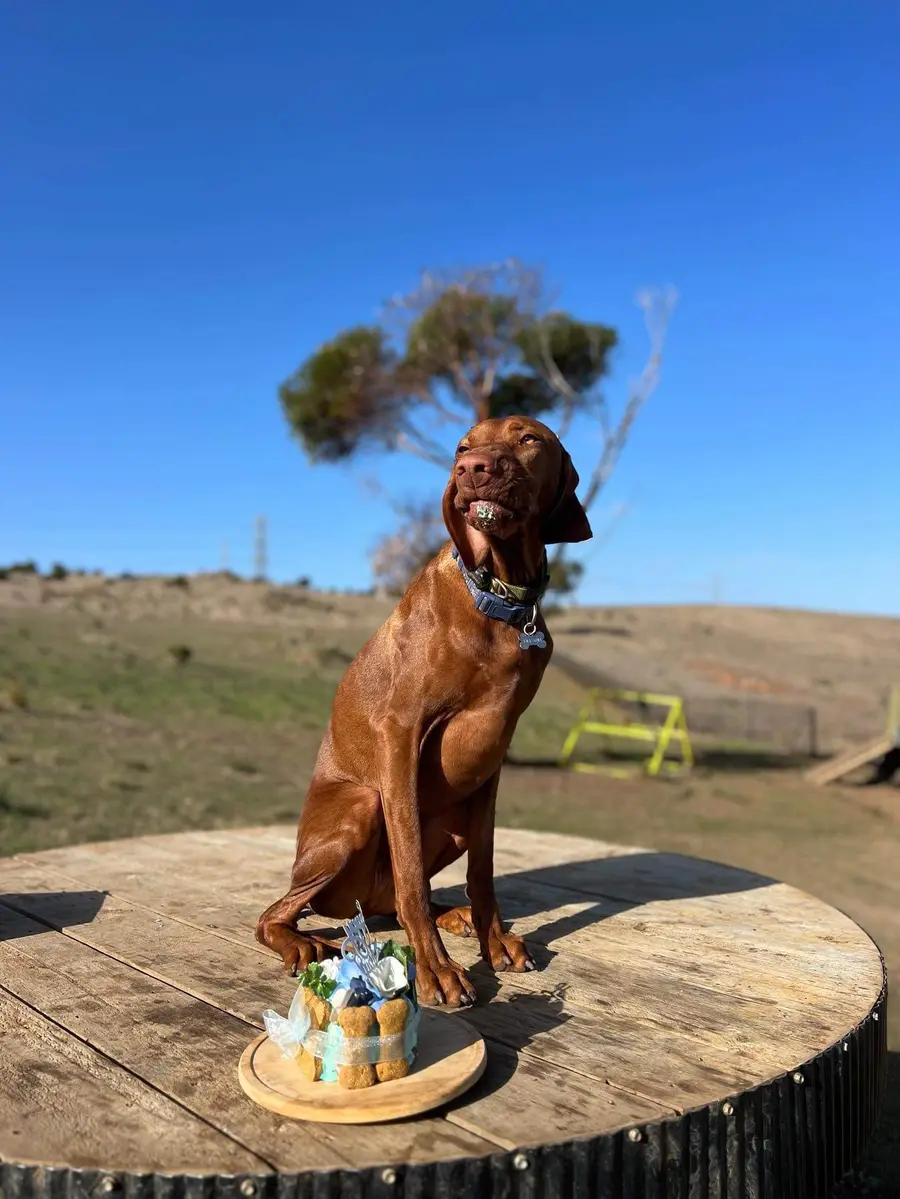
their Vizsla Nelson — who taught us why this app needed to exist.
Single-developer indie project, not a startup with a board to please.